The 26-hour flight to get to Kinshasa in the Democratic Republic of Congo (DRC) felt like eternity. I was perplexed as to why flights to get into Africa and within the continent generally are so expensive, infuriatingly long and complicated. But the answer lies in a myriad of intricate details like stringent regulatory barriers (meaning airlines can take forever to obtain clearances to launch new aviation routes), high tax rates (aviation fuel in Africa are twice the global rate) and limited demand. Still, it’s hard not to get frustrated when you’re stuck in transit for over 10 hours!!
After the long journey, I landed in Kinshasa, or ‘Kin’ as the locals call it. It is Africa’s second largest city with a population of around 12 million. Honestly, I was a bit nervous travelling to DRC given the Ebola outbreak in the North-east provinces, constant threat of violence and lax security. Afterall, UN Peacekeeping has its largest troop presence in DRC! But with each trip to a different country, I discover that these (sometimes irrational) fears subside once you land and make your way through the city and watch thousands of people lead their normal lives doing everyday activities.
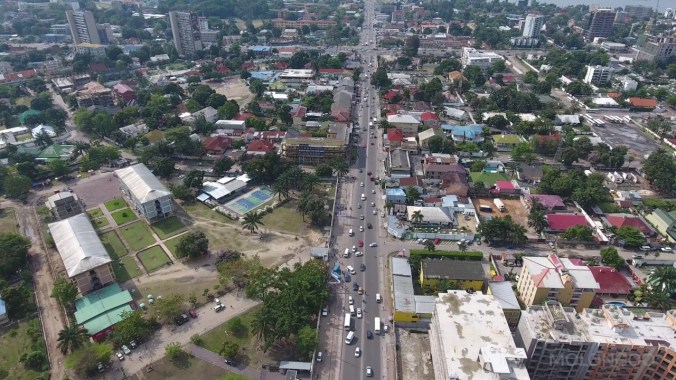
Things started getting interesting in Kin real quick! I work and live in an area which is supposedly the priciest in the country and where all expats live (for safety reasons). It’s where all the government ministries, UN bodies, NGOs are located. This is what it looks like (one can get into trouble here for clicking photographs in public, so this image is sourced from elsewhere):
But the cost of living shocked me. An average trip to the grocery store here can put you back by $50, a regular restaurant meal costs about $25/person and renting a small room costs $1000/month. This was equivalent or even more than what I spent living in Washington DC! For a country where over 80% of people live on less than $1.25 a day, these costs made absolutely no sense. Turns out as with several cities in Africa, expats (especially UN staff given their generous allowances and salaries) are driving up costs of basic necessities, making things much harder for the locals. Kin almost seemed to operate in 2 parallel worlds: One, a pricey lifestyle geared solely to expats and rich Congolese government officials. Two, a relatively cheaper one geared to local population working regular jobs. However, it is evident that the local population is hurting as a result since it is almost impossible to isolate these two economies in a city like Kin. Really made me wonder whether humanitarian work in the developing world has another side that we conveniently tend to ignore….
Another interesting thing that caught me off guard is the traffic. Being from India, I’m no stranger no congestion, frustratingly long jams and bad driving. But Kin took it to a whole new level! With no traffic signals in sight and roads filled with left AND right hand-drive cars (you read it right, both types of cars are imported into DRC), it is absolute chaos. A 3-4 km drive to work took me 1.5 hours! Photo below is a quick snippet of the traffic:
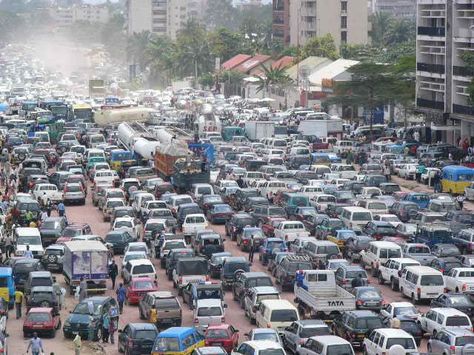
Honestly, given the size of the city (9,900 km2) and the relatively low number of cars, it shouldn’t be this difficult. But bad urban city planning, poor infrastructure (like the fact that many important connecting roads are mud-roads which become a mess at the slightest hint of rain), and that international organizations lavishly encourage use of 4x4s for staff, exacerbate the existing road conditions.
It’s only been about a week but this francophone city has already given me so much to experience! With a bustling art and cultural scene, a lust for life, an infectious energy and everyday frustrations with electricity and traffic, this city is overwhelming at first but it begins to grow on you. There is still a lot to learn about DRC’s complicated history and politics, but for now, Kinshasa has been a whirlwind introduction to the Congolese life!


