WOMEN’S DAY AND MORE…

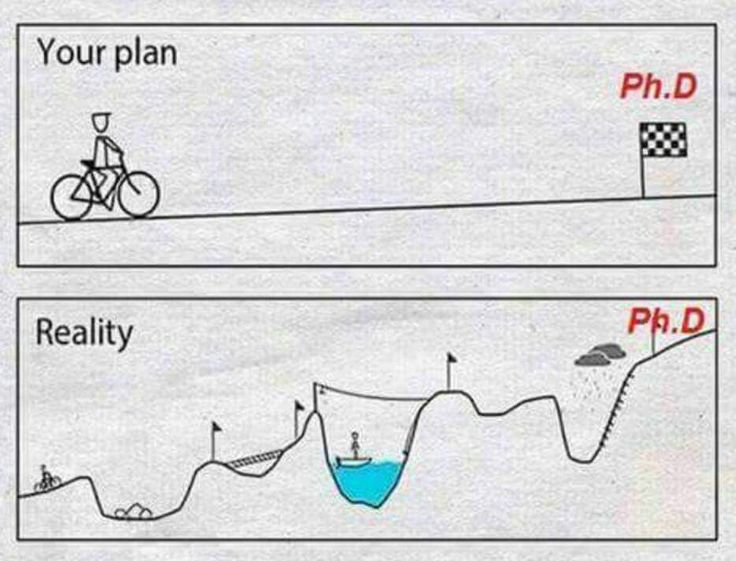
I’m 24, Indian, relatively privileged and a proud feminist. On women’s day, after tuning in to a panel on gender equality in India, I couldn’t help but reflect why the discussion left me so unsettled. Feminism has meant different things to me in every juncture of life. While studying, it was a prism to reflect on my younger self and confront problematic thoughts and the structures which perpetuated them. While working in the humanitarian sector, it was a lens to defy the narrative of elites and understand power at its core. Now as a doctoral student, I can question who creates the knowledge we know, for who, and how it is gendered.  

While we have made some progress in terms of right to work, vote and equal pay, I feel unsettled because I (and perhaps several other women) constantly negotiate between working towards the lofty ideals while giving in to the “practical”. Reflecting back, there are times when I have called people out for distasteful jokes on women, while simultaneously not contradicting close family members who perpetuate gender roles or even participating in highly gendered rituals. As a champion of women uplifting other women, I’m also guilty of feeling proud as the sole woman on the table. There are countless examples like these. I wonder if in this constant process of picking one’s battles and negotiating the “practical”, we are diluting the ideals we work towards. Afterall, why do some practical concerns such as job security, respecting cultural boundaries or personal relations have to be at odds with feminist goals and why is it that women are having to negotiate them constantly?  

In our fuzzy middle ground where we pick and choose our battles while working towards the goals of equality, I wonder who this middle ground caters to, whose story does it tell and how. For instance, is ours a middle ground that will treat men who help in care-giving as the laudable “exceptions” OR will it normalize burden sharing and simply denounce men who don’t participate? How will our middle ground be inclusive of women like me who are constantly dawdling between their sometimes incompatible cultural identity and feminist values?

These questions have no straightforward answer. But I’m concerned that a collective response which is split on these critical issues could weaken the progress. As we step into a far more complex world with colossal technological change, clash of cultures and a rapidly shifting political climate, these omnipresent gender-role negotiations will only become more pronounced.

So what do we do about this, you may ask. For the men, it might be worthwhile to step back and introspect on what these everyday negotiations look like for women at your workplace, university and/or home and how can you can become better allies. As for the women, acknowledging these trade-offs and reflecting why we each choose certain everyday battles over others will shed light on our own priorities, vision and even biases.

BLACK, WHITE AND EVERYTHING IN BETWEEN

The recent heart wrenching stories of George Floyd and Amy Cooper made its way to our dinner table conversation in South Sudan. My African-American colleagues shed light on how the systemic racism was not simply institutionalized in the justice and policing systems in the US, but impacted their lives in undeniable ways. From here, the conversation took a rather unexpected turn as a South Sudanese friend recounted her experience of studying in Mumbai as an undergraduate student and facing similar challenges for her skin color as she did in the US. From being name-called for her darker skin tone to receiving unwarranted advances and being stereotyped, I realized how racism isn’t just a black and white issue. There’s many more shades in between…

I dug further only to find a whole host of articles which explained the gravity of this issue in the Indian context. According to the Association of African Students in India (AASI), about 25,000 Africans study in Indian universities, drawn by their high academic standards, low fees and the use of English language as the medium of instruction. Nigeria sends the highest numbers to India, followed by Sudan and Kenya. A majority of them have reported racial discrimination, profiling and stereotyping. They are often presumed to be drug peddlers, burglars or even prostitutes, as some students report.

But these reports were only helping weave a story around what I had seen and observed. Even when I was back home in India during my breaks from working in Africa, people’s concerns for my safety and well-being were often laced with inadvertent bias. Questions like “is there proper food there?”, “are the local people safe?”, “can you walk around by yourself?” often come from a position of worry and concern, but also that of power. Africa is what most Indians would consider “poor”, “underdeveloped” and “risky”. Whether or not we acknowledge it, there is often a hidden preconception of economic, social and cultural superiority, that has been internalized.

72 years after our independence, we are far from overcoming colorism which is deeply rooted in our colonial past and the caste system. Cosmetics industry players make millions in India convincing men and women that white skin is what makes you attractive and successful. Growing up, kids are told not to play in the sun for too long for the fear of a tan. Our films mostly feature artists whose skin tones are rarely representative of the larger population. This worrying belief is evident everywhere we look.

To me, this feels strange. If anything, shouldn’t Indians (or more broadly the Asian world) be empathizing with Africa on issues of race, given our shared struggles as a former colony? I think the apathy lies in our simplistic understanding of race and privilege. The spectrum is not as simple as whites on one end and blacks on the other. There are many shades in the middle… shades of brown, if you will (the Asians, Latinos and so on…). While they do not enjoy the privileges of being a white person and are definitely victims of racism, their experiences may not necessarily be as heavy as that of a black person in this post-colonial world order. This gradation of color has led to a perception that being brown is better than black, and has placed the “in-betweens” in a confusing situation of balancing their newfound privilege over African races while simultaneously fighting discrimination from the so-called “superior” races.

This is all to say that if we want to fight institutionalized racism, we need to look within to confront our predispositions, even as a person of color. Yes, systemic change is paramount, but so is understanding our individual role in it. We cannot perpetuate biases against others, while also trying to fight the same biases when they take place against us.

Whether you’re white, black, brown or anything in between…why is it so hard to treat all colors the same?

WHEN THE TABLES TURN: WHAT AFRICA IS TEACHING US ABOUT PANDEMICS

48 hours. That’s the amount of time I had to find a plane ticket from Juba to Freetown. The Sierra Leonean government had made a rather sudden decision to close their borders and ban air travel altogether, giving travelers a notice of 2 days. There were rumors that South Sudan would be following suit. Soon enough, Juba officially shut its airport 3 days later, joining the list of African countries in doing so. For 2 countries (South Sudan and Sierra Leone) that have no official COVID 19 cases until now, I was rather stunned by the flurry of measures. But perhaps that is the secret ingredient.

As of today, the continent has recorded 1,400 cases across 43 countries, meaning 11 African countries remain virus-free. Out of this 1,400, bulk of the cases are accounted by 3 countries: South Africa (554), Egypt (366) and Algeria (201). This means that the remaining 40 countries in Africa have merely 279 cases at the moment. Compare this to the United States that is dealing with 35,000 cases or Italy with 64,000 cases.

 But this all seems very counter-intuitive. On a regular day, 8 direct flights operate between China and African nations (and not to mention countless others through transits in Addis Ababa or Nairobi). Given the amount of Chinese influence across Africa, why wasn’t COVID 19 exported here first? Or given the largely fragile public health system across the continent, why isn’t the virus cruising at lightning speed causing irreparable damage like Ebola did? The answer lies in “containment”.

Africa certainly got a head-start in this pandemic. But the head-start means nothing if there is inertia or inaction. It was understood early on that air-travel is one of the biggest avenues for transmission. As soon cases were detected, countries like Kenya admirably chose to shut down their airports, not just from COVID hotspots but from across the world, making exceptions just for Kenyan nationals. Even nationals who returned were forced to go through a mandatory 14-day quarantine period at hotels close to the airport. Now almost all countries in Africa have followed suit. Note that this is very different from “self-quarantine” which is being adopted by Western nations whereby the individual’s sense of moral responsibility could determine if someone else gets infected or not.

Apart from forced quarantine, an attitude of risk aversion was becoming evident as flights and passengers were being turned back. In Juba, for instance, a flight carrying passengers from Addis Ababa was turned back after it landed as the South Sudanese government did not want to risk any infections (Ethiopia at that point had less than 5 cases). Similarly, prior to the airport shutdown, 4 Japanese nationals boarded a flight from Monrovia to Freetown. Liberian authorities had seen one of them displaying symptoms and had alerted airport authorities in Freetown. Upon landing, the 4 passengers were sent back in the same aircraft while the remaining passengers were forced into 14-day quarantine at government-mandated facility near the airport.

Apart from restricting air travel, other measures have been put in place. Schools have been shut, public and religious gatherings are being regulated. Wherever possible, offices, supermarkets and housing compounds have sanitizer dispensers and hand washing facilities that every person is required to use before entering.

But not all is hunky dory. Powerful people (mostly high ranking government officials) are exploiting the loopholes within the system to gain waivers from mandatory quarantine after travelling to hotspots and later test positive for COVID (Cameroon is a case in point). Such individuals can singlehandedly nullify all the containment efforts.

This is all to say that every case counts here. Perhaps this sense of urgency comes from a dismal realization that even the most advanced healthcare systems like that of Spain and Italy are collapsing from COVID. Should the virus hit this continent with the same vigor, the consequences will be nothing short of disastrous. There are other considerations as well. From a cultural standpoint, social distancing would be extremely difficult to implement once things escalate. From an economic standpoint, aid cannot be expected from the usual donors as they are dealing with their own national crises.

With these complex considerations at play, there is only one solution: prevention. The petrifying consequence of what would happen if prevention fails or is failed by powerful individuals with poor judgement is yet to be known. But after this crisis passes, there is a lesson or two that the world needs to learn from Africa’s playbook about containment in early stages of a pandemic.

Until then, I hope everyone is staying safe wherever they are, washing their hands and staying calm! After my botched travel plans, I’m going about life in Juba armed with hand-wash and hope.

A CITY TO EXPERIENCE

The 26-hour flight to get to Kinshasa in the Democratic Republic of Congo (DRC) felt like eternity. I was perplexed as to why flights to get into Africa and within the continent generally are so expensive, infuriatingly long and complicated. But the answer lies in a myriad of intricate details like stringent regulatory barriers (meaning airlines can take forever to obtain clearances to launch new aviation routes), high tax rates (aviation fuel in Africa are twice the global rate) and limited demand. Still, it’s hard not to get frustrated when you’re stuck in transit for over 10 hours!!

After the long journey, I landed in Kinshasa, or ‘Kin’ as the locals call it. It is Africa’s second largest city with a population of around 12 million. Honestly, I was a bit nervous travelling to DRC given the Ebola outbreak in the North-east provinces, constant threat of violence and lax security. Afterall, UN Peacekeeping has its largest troop presence in DRC! But with each trip to a different country, I discover that these (sometimes irrational) fears subside once you land and make your way through the city and watch thousands of people lead their normal lives doing everyday activities.

Things started getting interesting in Kin real quick! I work and live in an area which is supposedly the priciest in the country and where all expats live (for safety reasons).  It’s where all the government ministries, UN bodies, NGOs are located. This is what it looks like (one can get into trouble here for clicking photographs in public, so this image is sourced from elsewhere):

gombe

But the cost of living shocked me. An average trip to the grocery store here can put you back by $50, a regular restaurant meal costs about $25/person and renting a small room costs $1000/month. This was equivalent or even more than what I spent living in Washington DC! For a country where over 80% of people live on less than $1.25 a day, these costs made absolutely no sense. Turns out as with several cities in Africa, expats (especially UN staff given their generous allowances and salaries) are driving up costs of basic necessities, making things much harder for the locals. Kin almost seemed to operate in 2 parallel worlds: One, a pricey lifestyle geared solely to expats and rich Congolese government officials. Two, a relatively cheaper one geared to local population working regular jobs. However, it is evident that the local population is hurting as a result since it is almost impossible to isolate these two economies in a city like Kin. Really made me wonder whether humanitarian work in the developing world has another side that we conveniently tend to ignore….

 Another interesting thing that caught me off guard is the traffic. Being from India, I’m no stranger no congestion, frustratingly long jams and bad driving. But Kin took it to a whole new level! With no traffic signals in sight and roads filled with left AND right hand-drive cars (you read it right, both types of cars are imported into DRC), it is absolute chaos. A 3-4 km drive to work took me 1.5 hours! Photo below is a quick snippet of the traffic:

83d3e62e582501ce48ceb3348db9f598--congo-around-the-worlds

Honestly, given the size of the city (9,900 km2) and the relatively low number of cars, it shouldn’t be this difficult. But bad urban city planning, poor infrastructure (like the fact that many important connecting roads are mud-roads which become a mess at the slightest hint of rain), and that international organizations lavishly encourage use of 4x4s for staff, exacerbate the existing road conditions.

It’s only been about a week but this francophone city has already given me so much to experience! With a bustling art and cultural scene, a lust for life, an infectious energy and everyday frustrations with electricity and traffic, this city is overwhelming at first but it begins to grow on you. There is still a lot to learn about DRC’s complicated history and politics, but for now, Kinshasa has been a whirlwind introduction to the Congolese life!