‘Kushe’ or ‘Hello’ was the first word I picked up in Krio, the most widely spoken language in Sierra Leone. In an attempt to show-off the little Krio that I had learnt, I greeted my colleagues with ‘Kushe’ and was stumped to receive a ‘Namaste’ in return!
That evening as the car radio blasted Justin Bieber and Beyonce songs, an old Bollywood song “Kya Kehna” came on. I watched in absolute wonder as the driver hummed the song and spoke about how Indian music is quite catchy and popular all across the country! Surprises kept flowing in as a man from Guinea engaged me in a 30-minute conversation in French on how Amitabh Bachchan and Kareena Kapoor should act in more films!
Not anticipating the Bollywood fanfare, I dug deeper to find out why, how and in what forms does India exert its influence in Sierra Leone. Turns out that among the foreign communities in Sierra Leone, 3 of them stand out distinctly: Europeans, Lebanese and Indians. While there is decent literature on the first 2, very little has been written about the Indian community, partly because they have been a much smaller group and did not spread all over the country like the rest.
From interacting with the locals, I learnt that the Indian community in Sierra Leone, and specifically in Kono district, is most actively engaged in the business of brewery and distillery production of alcohol. A lot of Indian businessmen were previously involved in the diamond trade prior to the civil war. When the war broke out in 1991, most fled the country and since then, the Lebanese traders have been leading the diamond business.
Perhaps the existence of an Indian community that has been long involved in trade could have paved way for the spread of Indian culture through mediums like films, music and cuisine. In modern parlance, this is called Soft power – a term coined by neo-liberal academician Joseph Nye of Harvard University to describe the ‘ability to attract and co-opt rather than coerce, use force or give money as a means of persuasion’. Since the term was first introduced in 1990, it has been increasingly used in the context of improving social and public perception through culture, sport, cuisine, art etc. Today, soft power is used almost as analogous with the power of culture.
Hence, it is possible to argue that India has been successfully capitalizing on its power of culture. As of date, Sierra Leone imports close to $85 million worth of goods annually from India, making India the third largest import origin country after China ($236 million) and the United States ($90 million). Given this, it is no surprise that TVS bikes from India are a common sight on the streets here.
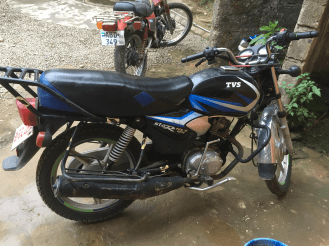
Additionally, the fact that both countries share a colonial past and are members of the Commonwealth feeds into the perception of Soft Power, with India being seen as the success story.
Trying to understand Indian influence through the lens of ‘Soft Power’ raises some broader questions. What are the limits to soft power? And how do we know when it translates to tangible influence? Can soft power without hard power backing (through a strong military or robust economy) still be effective?
I hope to research further and find answers to these questions. Meanwhile, my lesson for now is: when someone says namaste, learn to ask in Krio “Do you watch Indian movies?”
 Let's Talk Policy